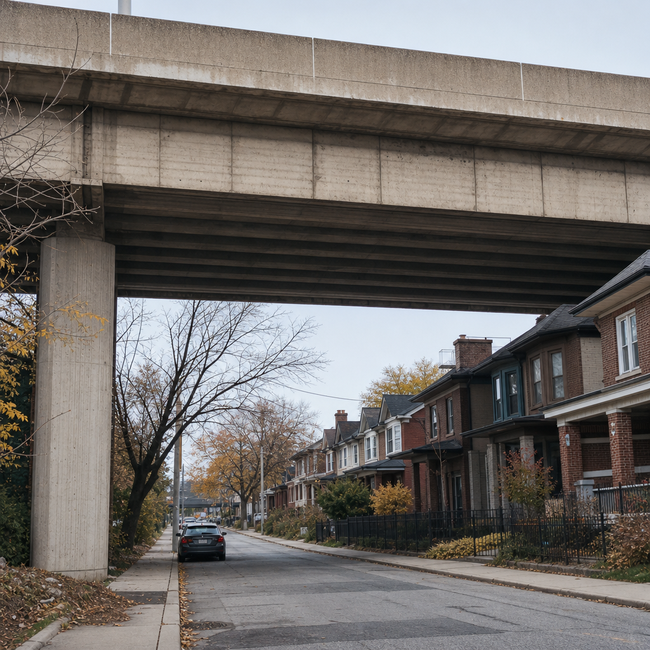
The Don Valley Parkway’s 1960s construction fundamentally altered Toronto’s east side landscape, creating an infrastructure divide that has influenced decades of real estate development. The Eastern Avenue Bypass and its grade-separated ramps to Adelaide and Richmond streets cut through what was primarily industrial land, fragmenting the area while enabling seamless traffic flow to Downtown Toronto’s core.
Today, this “concrete tissue” represents a fascinating case study in urban transformation. What began as a transportation necessity has evolved into a complex urban fabric where residential redevelopments now compete with legacy infrastructure. Developers and city planners have worked to mitigate the visual and social impact of overhead ramps through strategic park placement—efforts to soften the harsh realities of mid-century infrastructure design.
For real estate investors and homebuyers, this area illustrates how transportation infrastructure shapes neighborhood character and property values. The parkway’s presence has influenced both connectivity and urban design challenges that continue to define the east side market. Understanding this historical context provides valuable insights into why certain Toronto neighborhoods developed as they did and what future revitalization might look like.
Learn more about East Downtown’s transformation and infrastructure legacy in the original article.
Source: Read the original article