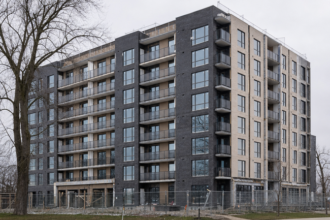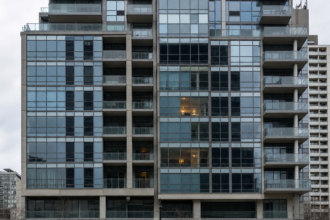

Toronto’s new condo market is facing a stark reality. According to a recent Altus Group report released by the Building Industry and Land Development Association (BILD), only 54 new condos were sold across all areas of Toronto in October 2025. This figure represents a significant downturn, especially when considering that October 2024 already marked a record low for new home sales.
Across the entire GTA, the picture isn’t much brighter. While 322 new single-family homes were sold, representing a 41% year-over-year decrease, condo sales fared only slightly better with 248 units sold – a 2% decrease from October 2024. Edward Jegg, research manager at Altus Group, highlighted that “some product is moving, but only under very specific conditions and price points, underscoring the need to bring costs back in line to get customers off the sidelines.”
The report also reveals a concerning trend in inventory. Total new home remaining inventory in the GTA sits at 21,241 units, comprised of 15,525 condo apartments and 5,716 single-family dwellings. Based on average sales over the past 12 months, this translates to a staggering 23.5 months of inventory – the highest level seen to date. This high inventory is partially due to a lack of new project launches, with only one new single-family project introduced in October.
Despite the sales slump, benchmark prices remain relatively high. The benchmark price for a new condo in the GTA reached $1,031,764, a 2.5% increase compared to October 2024. However, single-family homes saw a price dip, with the benchmark falling to $1,434,447, a 7.4% decrease over the past year.
Justin Sherwood, chief operating officer at BILD, warns of a potential “industry-wide shutdown” if governments don’t take decisive action to reduce costs associated with new home construction and bolster consumer confidence. He criticized the federal government’s limited HST relief program and echoed Premier Ford’s call for broader HST exemptions on new home purchases. The industry is urging for urgent action to address government-added costs and prevent further decline in the housing supply pipeline.